
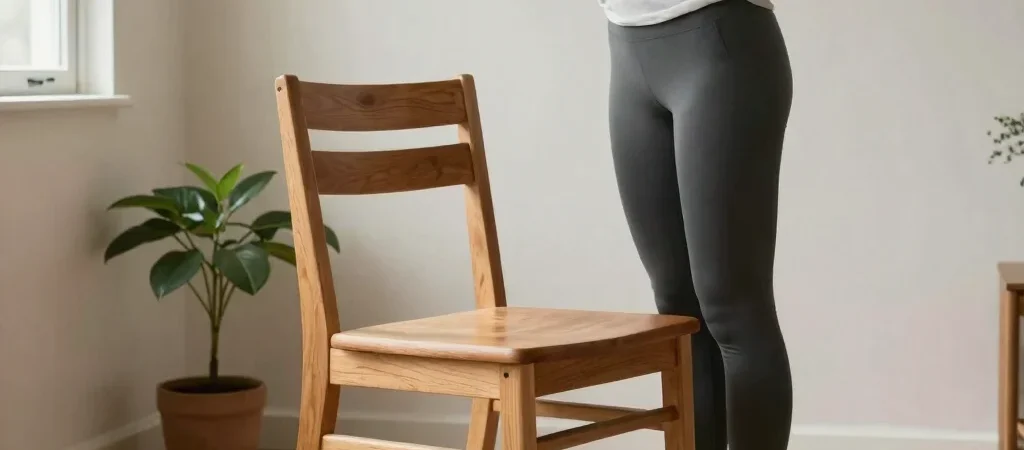
A chair already has a place in most homes, and it can do more than hold a sweater during a workout. Set it on a level floor, away from loose rugs, and it becomes a steady point of support for standing movement or a convenient place to sit between exercises. This is a practical option when floor work does not suit the room or the day.
Use support with intention
For a simple balance practice, stand beside the chair and rest one hand lightly on the back while shifting your weight from one foot to the other. Keep the movement small and controlled, and use more support if you need it. The chair is there to make the movement feel steadier, not to test how long you can balance without help.
You can also use the seat for a few slow sit-to-stands: place your feet comfortably, lean forward slightly, and stand only as far as feels manageable before sitting back down with control. If standing up and sitting down does not feel right, skip it and try a seated arm reach or shoulder roll instead. Check that the chair is stable and does not slide before you begin.
Keep the routine low-pressure
Pair a minute of seated movement with a short standing stretch, then pause and decide whether you want to continue. You might reach one arm overhead from the chair, then stand beside it for a gentle calf raise while holding the back for support. There is no required sequence; choose movements that make sense for your comfort and the available space.
Keep your breathing comfortable and avoid forcing a range of motion. If a movement brings pain, dizziness, or unusual discomfort, stop and adjust; for personal exercise guidance, check with a qualified health professional. A dependable chair and a few unhurried minutes can be enough to create a useful movement break at home.