
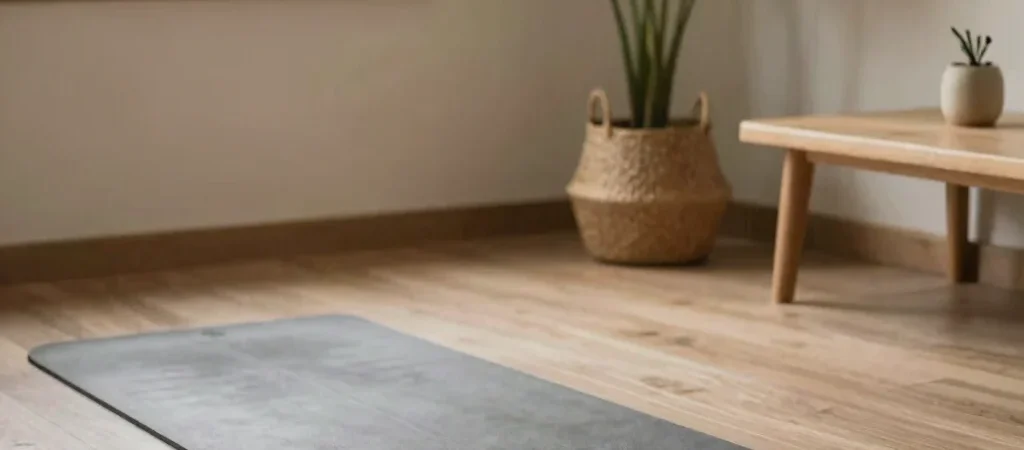
The coffee table is still in the room, the laundry basket is near the wall, and there is just enough space to unroll a mat. That can be a perfectly workable setup for yoga at home. A compact flow built around standing and kneeling poses can feel complete without requiring a clear, studio-sized floor.
Make the space feel workable
Move only what you need to move: a rug corner, a chair, or anything that could catch your foot during a transition. Keep water and a folded blanket nearby, and check that the mat does not slide on the floor. If you do not have a mat, a clear, stable surface is more useful than forcing a setup that feels awkward.
Begin seated or standing with a few easy breaths, then try gentle side reaches and shoulder rolls. From standing, move through a comfortable forward fold, a half lift with hands on thighs, and a slow return upright. Keep the range of motion easy enough that you can move without rushing or bumping into nearby furniture.
Let transitions set the pace
A simple sequence might continue with a low lunge, hands supported on the front thigh, followed by a step back to hands and knees. From there, try a gentle cat-and-cow movement or pause in a comfortable kneeling position before changing sides. You do not need to link every pose into one flowing sequence; a short pause between movements can make the practice feel more grounded.
Finish seated or lying down, choosing a position that feels comfortable in the space you have. If a pose feels unsteady, cramped, or uncomfortable, make it smaller or skip it. The useful measure is not how many poses fit into the room, but whether the practice leaves you feeling ready to move through the rest of your day.